


For many decades, Trinidad and Tobago has enjoyed the comfort of the predictability of an economy powered by oil and gas because why diversify when hydrocarbons are doing all the heavy lifting? But as reserves mature and revenues fluctuate, the national conversation step foot out and began exploring outside of oil and gas and into energy and beyond, particularly the T&T Energy Transition. The phrase rolls off the tongue with the confidence of a country that has been meaning to diversify for quite some time now. Has it really achieved that?
Let’s drill down with the data.
Suddenly, manufacturing is having a moment, agriculture is being rediscovered like a long-lost relative, and renewable energy is the exciting new frontier on paper, at least. SMEs are hailed as the backbone of the future economy, while policymakers and stakeholders enthusiastically map pathways to transformation, often with timelines that feel… flexible.
Of course, ambition is real. The urgency is undeniable. And the optimism? Carefully measured. Because in Trinidad and Tobago, going “beyond energy” isn’t just an economic strategy it’s a work in progress, a recurring headline, and, depending on who you ask, either a turning point or a very familiar promise dressed in new language.
A Necessary Narrative
Media coverage consistently frames diversification not as optional, but as urgent. Declining oil production, reduced energy revenues, and long-standing structural dependence have pushed the issue to the forefront. Analysts frequently describe the country as being at a “crossroads,” with diversification seen as essential to long-term resilience.
This urgency shapes the tone: diversification is no longer aspirational, it is existential.
Manufacturing: Quiet Winner of Growth
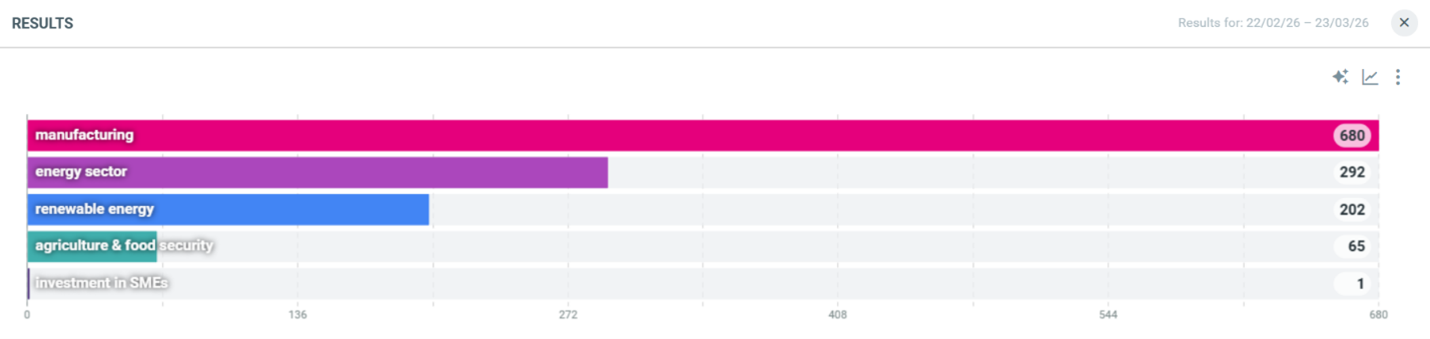
Our data shows that reporting, particularly around IMF assessments, paints manufacturing as an understated success story. It is certainly less hyped than agriculture or energy transition, but it is driving real growth, and it is consistently validated by IMF and data. It has been identified as a key driver of recent economic activity, even as the energy sector stagnates.
Media sentiment here is cautiously positive. There is recognition that manufacturing has “underpinned” growth but also concern that policy measures (such as taxation or fiscal tightening) may inadvertently constrain its expansion. This dual narrative progress versus policy friction appears frequently.
Renewable Energy: Vision Ahead of Execution
Renewable energy occupies a prominent but still largely aspirational space in media discourse. Initiatives like green hydrogen and offshore wind are often highlighted, but typically.
The tone here leans toward skepticism-with hope:
Agriculture & Food Security: Rediscovering Lost Potential
Agriculture is frequently portrayed as both a missed opportunity and a future pillar. Despite contributing a very small share to GDP today, it is repeatedly identified in commentary as critical for food security and import substitution.
Sentiment trends include:
There is also a noticeable shift toward linking agriculture with agro-processing and value chains, suggesting a more modern, integrated vision.
SMEs and Private Sector Investment: The Engine of Diversification
Across policy announcements and IMF commentary, SMEs are positioned as central to diversification. Strengthening access to finance, improving the business environment, and encouraging entrepreneurship are recurring themes thus increasing Share of Voice (SoV).
Media sentiment here is broadly supportive but pragmatic. While initiatives are welcomed, coverage often questions implementation capacity and the pace at which reforms translate into tangible business growth.
There is also an emerging narrative that true diversification will be private-sector led not state-driven.
The Emerging Media Consensus
Across sectors, a few clear themes define the media narrative:
Cross-Sector Share of Voice Ranking (2026)
Tier 1 – Dominant Narrative
Tier 2 – Strategic Narrative
Tier 3 – Peripheral Narrative
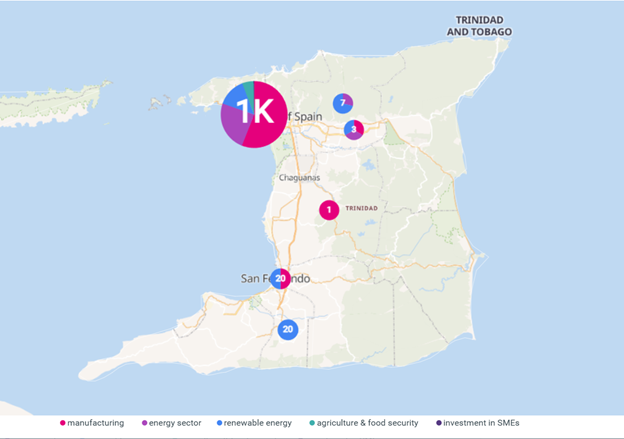
In T&T Economic Diversification 2026, Share of Voice is being driven more by urgency and policy signaling than by economic transformation.
What’s loudest in the media is not always what’s growing fast. The story of T&T’s economic diversification is still being unfolded. SoV reflects a country in transition, one where momentum is built, but structural transformation remains a work in progress. There is belief in the direction. There is debate about the delivery.
And in that tension lies the true narrative: not whether diversification will happen, but when, and whether it will happen fast and effectively enough to redefine the country’s economic future.